
Stretch film price: €/kg, €/metre or €/pallet
The price of stretch film is almost always given in euros per kilo, but what a company really pays is what it costs to wrap each pallet. When comparing film quotes, looking only at the €/kg can prove expensive.
Aerix Packaging · Technical team
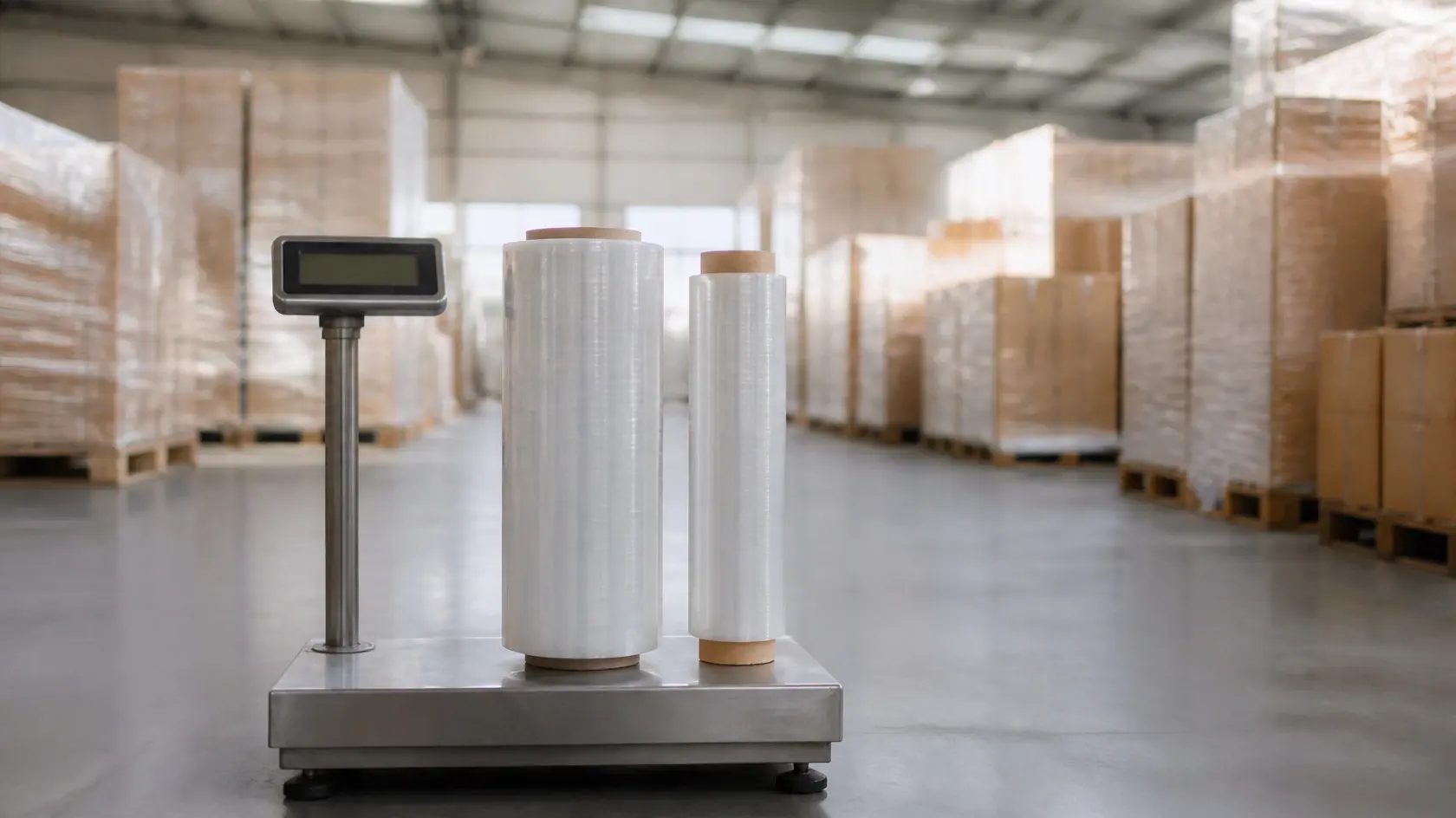
Step one: convert to €/metre. Grams per metre come from multiplying the width in millimetres by the thickness in microns and by 0.92 (the density of polyethylene), then dividing by 1,000. A 500 mm, 23-micron film weighs about 10.6 g per metre; a 9-micron pre-stretched film, about 4.1 g. At €1.80/kg the first works out at €0.019 per metre; at €2.60/kg the second costs €0.011 per metre.
Step two, the decisive one: the €/pallet. Weigh the reel before and after wrapping several pallets and multiply the average consumption by the price per kilo. In the example, if the current film uses 280 g per pallet (€0.50) and the pre-stretched one 150 g (€0.39), the new quote saves 22%.
- −22%
- cost per pallet with the pre-stretched film in the example, even though it costs more per kilo
- €0.011
- per metre for the €2.60/kg film, against €0.019 for the €1.80/kg one
None of this counts unless both films hold the load the same. The test must be run with the same containment force; otherwise the saving is only apparent and the risk moves to transport. It is also worth checking that the price is per net kilo, without the core, and that the real thickness matches the data sheet.
More news