
Stretch film for frozen goods: what happens at -20 °C
Choosing the right stretch film for frozen goods is key in December. It is peak season for frozen food, seafood and Christmas products, more pallets go into the freezer stores, and that is when an unsuitable film shows most: the pallet that left the dock firm reaches the customer loose.
Aerix Packaging · Technical team
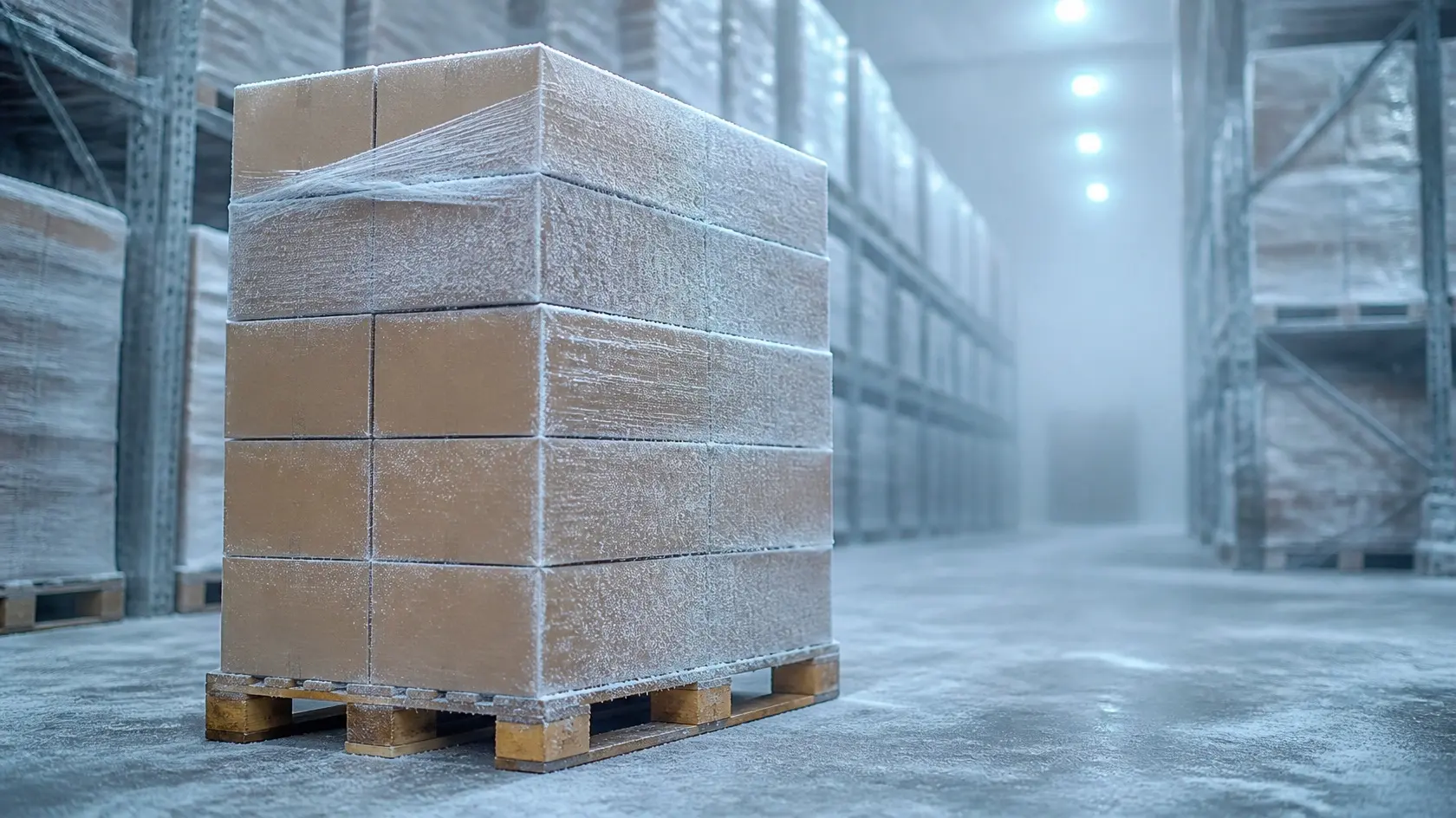
Cold changes how film behaves. At low temperature it loses stretch (machinery makers quote elongation falling from around 250% to about 200%) and, above all, cling: the layers stick to each other less well and the tail tends to come loose. The freezer store also has a lot of air circulation, which makes wrapping inside harder.
The second critical moment is leaving the store. Going from -20 °C to the dock, moisture in the air condenses on the cold pallet. That condensation further reduces cling and, if trapped under the film, dampens the cardboard boxes, which lose strength and can give way.
Key figure
4 measures that prevent the loose pallet
- Wrap at room temperature, before the pallet goes into the store.
- Secure the tail properly so it does not come loose in the cold.
- Add extra wraps at the base to fix the load to the pallet.
- Use a film formulated for cold and test it in the real store.
For anyone who needs to palletise frozen goods, the conclusion is practical: stretch film for frozen goods is not chosen by price or gauge alone, but by how it behaves in each store. If wrapping has to happen inside, there are wrappers built to work down to -30 °C. At Aerix we recommend always checking the result in real conditions before the season.
More news